An explainer video is a short video — usually 30 to 90 seconds — that explains what a product, service, or concept is and why it matters, using plain language instead of technical detail. Explainer videos are one-to-many marketing assets meant to build understanding quickly, typically on a landing page, in an ad, or at the top of a sales deck.
Key takeaways
- 96% of people have watched an explainer video to learn more about a product or service, according to Wyzowl — making it one of the most consumed content formats in B2B and consumer marketing alike.
- 85% of people say they've been convinced to buy a product or service after watching a video, per Wyzowl's Video Marketing Statistics 2026, underscoring the format's persuasive power.
- The strongest explainer videos follow a problem-solution-proof-action structure: open with the viewer's pain point, introduce the solution, show it working, then close with a clear call-to-action.
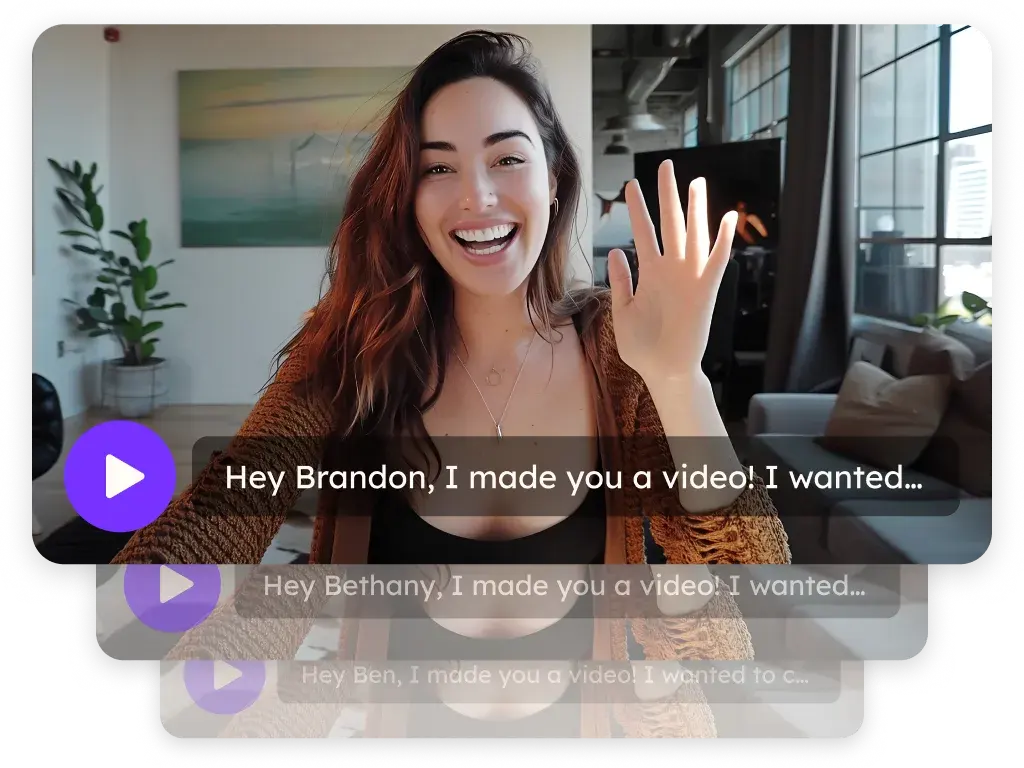
- Explainer videos are one-to-many assets — the same video is shown to every visitor — which is different from AI video personalization, where a rep records one video and AI auto-personalizes a version for each individual prospect.
- When asked how they'd prefer to learn about a product, 63% of people say they'd rather watch a short video than read an article, ebook, or attend a webinar, per Wyzowl.
How long should an explainer video be?
Most effective explainer videos run 30 to 90 seconds. That's long enough to state the problem, show the solution, and land a call-to-action, but short enough to hold attention on a landing page or in a paid ad where viewers decide to keep watching within the first few seconds.
What makes an explainer video different from a personalized sales video?
An explainer video is a single, one-to-many asset built for broad marketing use — every visitor sees the same video. A personalized sales video starts from one recording but uses AI voice cloning and dynamic backgrounds to generate an individually tailored version for each prospect, naming them and showing their company, which is a one-to-one outreach format rather than a marketing asset.
Does an explainer video actually help close deals?
Yes — Wyzowl reports 85% of people say video has convinced them to buy a product or service, and pages with video are widely reported to convert meaningfully better than pages without. Explainers work best earlier in the funnel to build understanding; personalized video tends to perform better once a specific prospect has been identified.
96% of people have watched an explainer video to learn more about a product or service.
— Wyzowl, The Explainer Video Effect: Turn Clicks into Customers
Related terms
animated explainer videos · video prospecting · personalized video · video cta
Related reading
Frequently asked questions
What is an explainer video used for?
Explainer videos are used to quickly communicate what a product or service does and why it matters, most often on landing pages, in ads, and at the top of sales decks.
How long is a typical explainer video?
30 to 90 seconds. Long enough to make the case, short enough to hold attention before the viewer clicks away.
Is an explainer video the same as an animated explainer video?
No. 'Explainer video' is the broader category and can be live-action, screen capture, or animated. An animated explainer video is a specific sub-type that uses motion graphics instead of filmed footage.
What's the difference between an explainer video and a personalized video?
An explainer video is a single asset shown to everyone. A personalized video uses AI to generate a unique version of a base recording for each prospect — addressing them by name and showing their company — which explainer videos don't do.
Do explainer videos improve conversion rates?
Yes. Wyzowl reports 85% of people say video has convinced them to make a purchase, and explainer videos are one of the most common formats used to drive that effect on landing pages.
What structure do the best explainer videos follow?
Problem, solution, proof, action: state the viewer's pain point, introduce the product as the solution, show it working, then close with a specific call-to-action.
Published September 2026