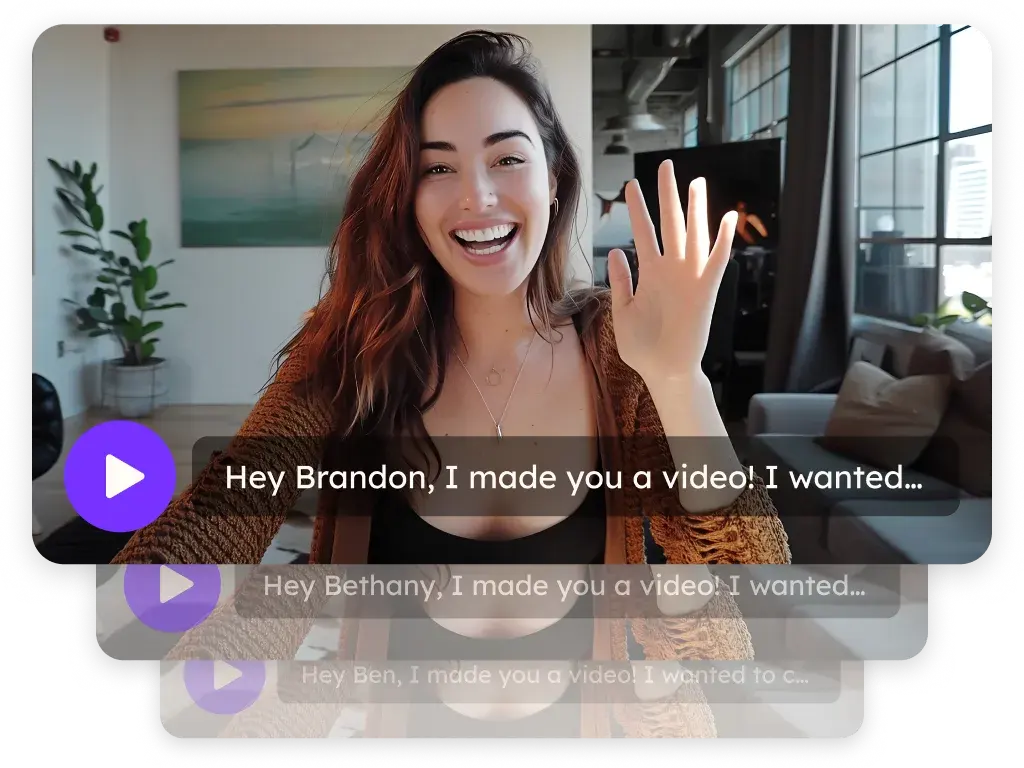
Personalized video is a video in which on-screen elements — the recipient's name, company, website, or relevant data — are dynamically inserted so each viewer receives a version tailored to them. An AI video personalization platform makes this scalable: a rep records one video and the platform auto-generates thousands of individualized versions using dynamic backgrounds, text overlays, and AI voice cloning.
Key takeaways
- Personalized video dynamically inserts the recipient's name, company, website, or data into the video frame at delivery time — no separate recording per contact required.
- McKinsey's Next in Personalization 2021 research finds companies that excel at personalization generate 40% more revenue from those activities than average players.
- An AI video personalization platform makes personalized video scalable: record one video, personalize at scale using dynamic backgrounds, text overlays, and AI voice cloning.
- Seeing your own name or company branding on screen in the first seconds of a video signals relevance, which reduces early drop-off and improves watch-through rate.
- Common personalization variables include first name, company name, job title, website URL displayed in the video frame, and industry-specific talking points pulled from a CRM.
How does personalized video differ from just saying someone's name on camera?
Manually saying a prospect's name requires a separate recording per contact. AI video personalization dynamically renders each viewer's name, company website, or logo into the video at delivery time — enabling thousands of individualized sends from a single recording. McKinsey's 2021 personalization research finds companies excelling at personalization generate 40% more revenue than average players.
What data variables can be personalized in a sales video?
An AI video personalization platform can dynamically insert first name, company name, job title, website URL (displayed in a live browser tab within the video frame), LinkedIn profile screenshot, industry sector, or CRM-sourced talking points. The most impactful variables are those visible on screen in the first five seconds, when drop-off risk is highest.
Does AI-generated personalization look natural to prospects?
High-quality AI video personalization platforms maintain consistent lip-sync, voice tone, and visual composition across thousands of individualized renders. In short-form sales videos under 60 seconds, the personalization reads as intentional rather than mechanically inserted — particularly when dynamic backgrounds use the prospect's actual company website or branding.
Companies that excel at personalization generate 40 percent more revenue from those activities than average players.
— McKinsey & Company, 'The Value of Getting Personalization Right—or Wrong—Is Multiplying', November 2021
Related terms
video prospecting · ai avatar · voice cloning · video email · watch through rate
Related reading
Frequently asked questions
How is personalized video different from just saying someone's name on camera?
Manually saying a name requires a separate recording per prospect. AI video personalization dynamically renders each viewer's name, company, or website into the video at delivery time — no additional recording per contact needed.
What data can be personalized in a video?
Common personalization variables include the prospect's first name, company name, job title, website URL displayed in a browser tab within the video frame, LinkedIn profile, and industry-specific talking points pulled from a CRM or enrichment tool.
Does personalization actually improve watch-through rates?
Personalized content consistently outperforms generic content in engagement metrics across digital channels. In video specifically, seeing your own name or company branding on screen in the first few seconds signals relevance and reduces drop-off.
Is AI-generated personalization detectable?
High-quality AI video personalization platforms render personalization so the natural lip sync, voice tone, and visual composition remain consistent. The result reads as intentional rather than mechanically inserted.
What is the ROI case for personalized video in outbound sales?
McKinsey's Next in Personalization 2021 research shows companies excelling at personalization generate 40% more revenue than average peers. In sales outreach specifically, personalized video reduces the pool of dismissed messages and raises reply rates compared to generic text or video outreach.
Can personalized video work for marketing campaigns, not just sales?
Yes. Personalized video works across demand generation, customer success, and renewal campaigns — any touchpoint where a tailored message improves conversion. Campaigns using personalized video in email consistently see higher click-through and conversion rates than generic video.
How many contacts can be reached with one personalized video recording?
With an AI video personalization platform, one base recording generates thousands of individualized versions — each with the recipient's name, company, and context rendered in. There is no practical ceiling on personalized sends from a single recording session.
Published June 2026